
Table of Contents
If a roofer discovers rotten roof decking during replacement, the damaged wood must be evaluated and appropriately replaced before new roofing materials are installed. The contractor should document the damage, explain the additional work, and obtain the necessary authorization before proceeding. The final repair scope may remain uncertain until concealed areas are exposed.
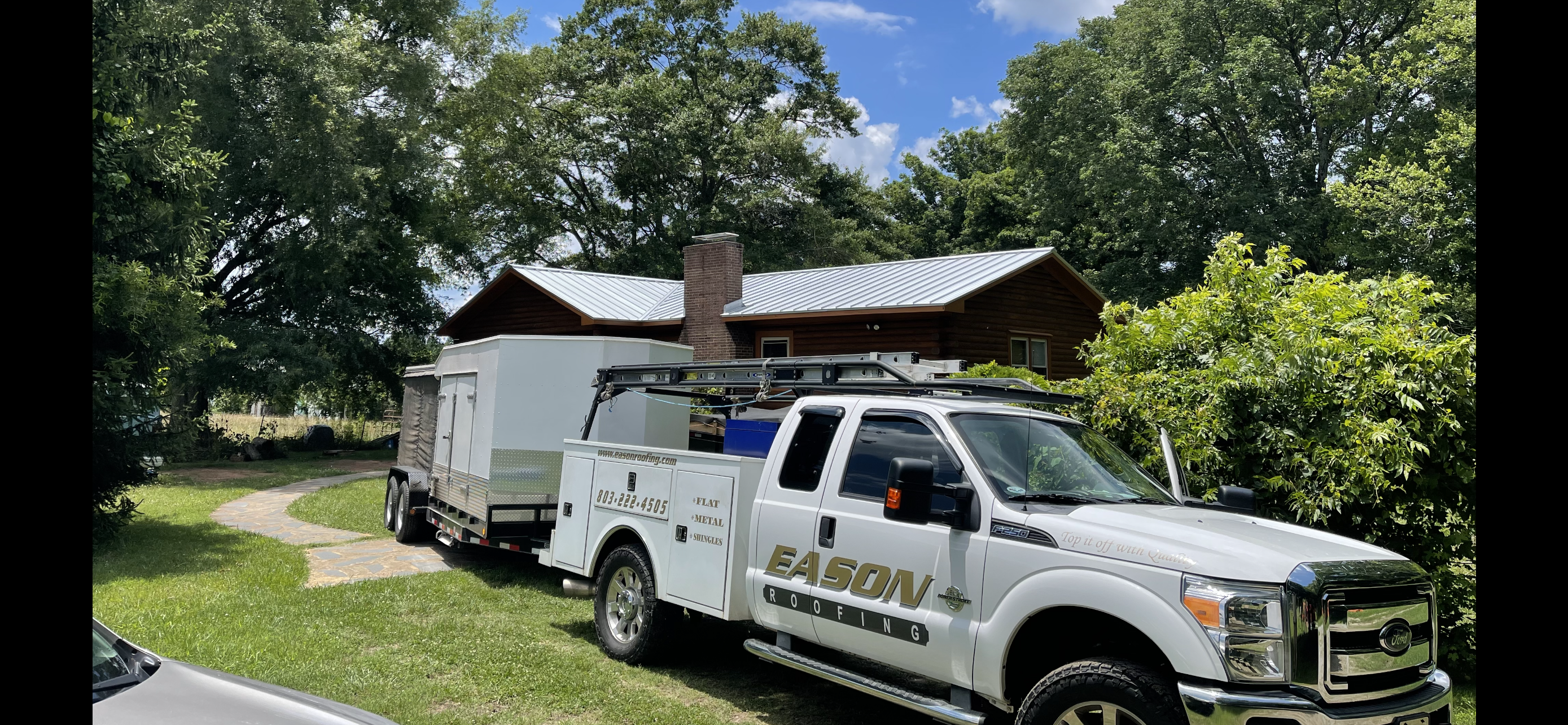
Finding rotten roof decking during roof replacement can affect the project’s cost and schedule. At Eason Roofing, we help homeowners in Rock Hill, SC, and surrounding communities understand roof conditions and the work needed to support a new roofing system.
What Happens If Rotten Roof Decking Is Found During Replacement?
Roof decking is the structural sheathing beneath the roofing materials. It provides the surface that supports underlayment and asphalt shingles.
During a roof replacement, contractors remove the existing roofing materials to expose the decking. This gives them an opportunity to inspect areas that were previously covered.
If they discover deteriorated wood, the affected sections must be assessed before installation continues.
What Happens After the Damage Is Discovered?
The contractor should determine how much decking is affected, whether the surrounding material remains suitable, and what replacement work is needed.
The process generally involves:
- Identifying the damaged sections: The roofing crew examines exposed decking for rot, deterioration, and other conditions that could affect its ability to support new materials.
- Documenting the findings: Photographs and measurements help establish the location and extent of the damage.
- Explaining the additional work: The contractor identifies which sections require replacement and whether the discovery changes the original estimate.
- Obtaining authorization: Additional work should follow the approval procedures established in the roofing contract.
- Replacing unsuitable decking: The damaged sections are removed and replaced with materials that satisfy applicable installation requirements.
Once the decking is suitable for installation, the contractor can proceed with the remaining roofing components.
Why Can’t New Shingles Be Installed Over Rotten Decking?
Asphalt shingles must be installed over a suitable roof deck.
Rotten or deteriorated wood may no longer provide a secure surface for roofing fasteners. Nails can lose holding strength when the wood beneath them is weakened.
Damaged decking may also affect the stability of the roofing assembly.
According to GAF’s guidance on roof decking, deteriorated sheathing can compromise the support needed for proper shingle installation.
Covering unsuitable decking with new underlayment and shingles does not restore the strength of the damaged wood.
Why Can Decking Damage Stay Hidden Until Tear-Off?
Roof decking sits beneath layers of roofing materials, making much of its upper surface difficult to evaluate during a standard exterior inspection.
A contractor may notice warning signs before replacement, but the full extent of damage may not become visible until the old roofing is removed.
Moisture Can Accumulate Beneath Existing Shingles
Water can enter through damaged shingles, deteriorated flashing, or other vulnerable areas.
Over time, repeated moisture exposure may weaken the underlying wood.
Possible sources include:
- Damaged or missing asphalt shingles
- Deteriorated flashing around chimneys and vents
- Improperly sealed roof penetrations
- Previous roof leaks that were not fully addressed
- Excessive attic moisture or condensation
Wood deterioration may continue even when interior water stains are not immediately visible.
For example, a Rock Hill homeowner might replace an aging shingle roof without having experienced an obvious ceiling leak.
During tear-off, the contractor could discover deteriorated sheathing near a roof valley where moisture had repeatedly entered.
This illustrates why an exterior inspection cannot always establish the complete condition of concealed decking.
Why Pre-Replacement Estimates Have Limitations
Before roof replacement begins, contractors can inspect accessible areas and look for indications of hidden damage.
However, they cannot always determine the exact number of decking sheets requiring replacement.
Some sections may appear acceptable from below but show deterioration on their upper surfaces.
Other areas may be concealed by insulation, framing, or existing roofing materials.
A roofing estimate should explain how unexpected decking discoveries will be handled rather than assuming all concealed wood is undamaged.
How Is Roof Decking Different From Rafters and Underlayment?
Roof decking, rafters, and underlayment perform different functions within a roofing system.
Understanding these differences helps homeowners interpret the contractor’s findings and avoid confusing a decking repair with more extensive structural work.
Roof Decking
Roof decking, also called roof sheathing, consists of panels or boards attached to the roof framing.
Many residential roofs use plywood or oriented strand board (OSB).
These materials provide a continuous surface for installing underlayment and shingles.
When decking becomes rotten or severely deteriorated, the affected wood may need replacement to restore an adequate roofing substrate.
Rafters and Trusses
Rafters and trusses form the roof’s supporting framework.
They carry loads through the structure and help establish the roof’s shape.
Although decking attaches to these components, replacing a damaged sheet of plywood is different from repairing a structural rafter or truss.
If a contractor discovers deteriorated framing, further evaluation may be necessary before determining an appropriate repair.
Roof Underlayment
Underlayment is installed above the decking and beneath the shingles.
It provides an additional layer of protection against water entering the roof assembly.
However, underlayment does not replace the structural function of decking.
Even a high-quality underlayment cannot compensate for severely weakened wood beneath it.
This distinction matters when homeowners review estimates because decking, framing, and underlayment repairs involve different materials and work requirements.
Does Damaged Decking Require Replacing Every Sheet?
No. Discovering rotten decking does not automatically mean every sheet on the roof must be replaced.
The scope depends on how far the deterioration extends and whether the remaining decking meets applicable requirements.
When Localized Replacement May Be Enough
If damage affects only a limited section, the contractor may be able to replace the affected sheathing while retaining suitable surrounding material.
For example, deterioration near a plumbing vent might involve a relatively small area.
Once the damaged material is exposed, the roofer can determine whether localized replacement is appropriate.
The work must still provide suitable support and fastening for the new roofing materials.
When More Extensive Replacement May Be Necessary
Some roofs have deterioration across multiple sections.
Repeated leaks, prolonged moisture exposure, or widespread material damage can increase the amount of sheathing requiring replacement.
The contractor may also discover that older decking does not provide an adequate substrate for the planned roofing system.
In those circumstances, replacing additional material may be necessary even if every sheet does not display obvious fungal decay.
How Does a Contractor Determine the Replacement Area?
The contractor should evaluate visible deterioration, material condition, fastening suitability, and the construction requirements of the roof.
Replacement material must be appropriate for the roof design, framing support, and roofing manufacturer’s specifications.
Homeowners should ask which areas need replacement and whether the work involves isolated sections or a broader decking problem.
The objective is to replace unsuitable material without assuming that undamaged decking must automatically be discarded.
What Documentation Should Accompany Added Work?
When rotten decking is discovered, the homeowner should receive a clear explanation of how the finding affects the agreed project.
Documentation is particularly important because the damaged wood may not have been visible when the original roofing estimate was prepared.
Photographs of the Exposed Damage
Photographs help establish the condition of the decking before removal.
Useful documentation may show:
- The location of affected sections
- Visible rot or deterioration
- The extent of damaged material
- Adjacent areas requiring evaluation
- Replacement decking after installation
Photographs can also help homeowners understand why additional work was recommended.
However, pictures alone may not establish every technical condition. The contractor’s explanation should accompany the visual evidence.
Written Description of the Additional Work
The revised scope should distinguish decking replacement from work already included in the original agreement.
It should explain what material will be replaced, the quantity involved, and whether other roofing components are affected.
If additional work is discovered during removal, that change should also be documented.
For example, replacing several damaged sheets may expose another section requiring attention.
The homeowner should understand how these subsequent findings will be communicated and approved.
Records to Keep After Completion
Homeowners should retain the original estimate, approved changes, relevant photographs, and final invoice.
These records can help establish what work was completed and may be useful for future roof evaluations or property transactions.
At Eason Roofing, we understand that homeowners want clear information when unexpected roofing conditions arise.
Our roof replacement services in Rock Hill and York, SC address residential roofing needs, including evaluating damage that may affect replacement work.
How Should Decking Allowances and Change Orders Be Handled?
A decking allowance is a provision in a roofing estimate that accounts for a specified amount of potential sheathing replacement.
A change order documents an adjustment to the original work, cost, or project conditions.
These provisions can help homeowners understand how unexpected damage will affect the final bill.
What Should a Decking Allowance Include?
Some contractors include a predetermined quantity of decking replacement in their initial estimate.
Others identify decking as an additional item that will be charged if replacement becomes necessary.
The contract should explain:
- Whether any decking replacement is included
- How the included quantity is measured
- What happens when additional material is required
- Whether labor and disposal are included
- How quantities will be documented
- When homeowner approval is necessary
For example, an estimate might include a limited decking allowance but require separate authorization if the damage exceeds that amount.
This is an illustrative contract arrangement, not a statement of Eason Roofing’s pricing policy.
Why Should Homeowners Review Change Orders?
A change order helps both parties document work that differs from the original agreement.
For unexpected decking replacement, it may identify the additional materials, labor, cost adjustments, and any effect on scheduling.
Homeowners should review the proposed changes before authorizing them, consistent with the contract.
A written process reduces uncertainty about whether the additional work was approved and what the final charge covers.
Why Shouldn’t You Assume a Fixed Per-Sheet Price?
The cost of decking replacement can vary based on the materials, roof configuration, access, labor, and extent of damage.
A single per-sheet amount may not account for every condition encountered during removal.
For instance, replacing isolated sheets near a roof edge may involve different work than addressing extensive deterioration around several roof penetrations.
Homeowners should request an explanation of the applicable pricing rather than relying on an unverified general estimate.
If unexpected damage is extensive, the contractor should explain the revised scope before continuing with affected work.
How Does the Contractor Address the Moisture Source?
Replacing rotten decking corrects the damaged substrate, but it is also important to understand why moisture reached the wood.
Without addressing the source, the new roofing assembly could face similar problems.
Reviewing Flashing and Vulnerable Roof Areas
Flashing helps direct water away from intersections and penetrations.
Deteriorated flashing around chimneys, plumbing vents, skylights, and roof transitions may allow water into concealed areas.
When rot is discovered near these locations, the contractor should evaluate whether a flashing defect contributed to the damage.
The appropriate correction may involve replacing damaged flashing or addressing another affected roofing component.
Considering Attic Moisture and Ventilation
Not all roof decking deterioration begins with an exterior leak.
Moisture can also accumulate when humid interior air enters attic spaces and condenses on cooler surfaces.
Poor ventilation or uncontrolled indoor moisture may contribute to repeated dampness.
A roofing contractor may evaluate visible ventilation conditions and recommend further assessment when moisture appears to originate inside the building.
The necessary solution depends on the source rather than assuming additional vents will solve every problem.
Why the Moisture Source Matters
Consider a homeowner who discovers rotten sheathing near a bathroom exhaust duct.
The damage might be associated with exterior water intrusion, condensation, or another condition.
Replacing the affected wood addresses the deterioration, but the contractor should also determine whether the moisture pathway requires correction.
The same principle applies to damaged roof valleys, penetrations, and flashing areas.
A suitable decking repair should support the new roofing system while addressing identifiable conditions that contributed to the damage.
FAQs
Why Can Decking Damage Stay Hidden Until Tear-Off?
Roof decking is covered by underlayment and shingles, making the upper surface difficult to inspect before removal. Moisture damage can develop beneath these materials without obvious interior leaks. Tear-off exposes the wood and allows the contractor to evaluate concealed deterioration.
How Is Roof Decking Different From Rafters and Underlayment?
Roof decking provides the sheathing surface beneath the roofing materials. Rafters and trusses form the supporting framework, while underlayment creates an additional protective layer above the decking. Damage to each component requires a different assessment and possible repair.
Does Damaged Decking Require Replacing Every Sheet?
Not necessarily. Localized deterioration may require replacing only the affected sections. More extensive damage or unsuitable existing materials may justify broader replacement. The contractor should determine which areas provide an acceptable substrate for the new roofing system.
What Documentation Should Accompany Added Work?
Homeowners should request photographs, an explanation of the damage, a written scope of the additional work, and applicable cost adjustments. Approved change orders and the final invoice should identify the decking replacement completed.
How Should Decking Allowances and Change Orders Be Handled?
The roofing contract should explain whether any decking replacement is included in the original estimate and how additional work is priced. Change orders should document revised quantities, costs, and authorization requirements before the affected work proceeds.
Discuss Your Roof Replacement With Eason Roofing
Finding rotten roof decking during replacement can raise questions about additional work, material requirements, and unexpected costs. Understanding the condition of the exposed wood helps homeowners make informed decisions before the new roofing system is installed.
At Eason Roofing, we provide residential roof replacement services in Rock Hill, York, Fort Mill, and surrounding communities. We can evaluate roofing conditions, explain recommended work, and discuss replacement options based on your property’s needs.
If you’re preparing for a roof replacement or concerned about possible hidden decking damage, contact our team to discuss your project.
Call Eason Roofing at (803) 631-4505 or contact us online to request a roof replacement estimate.